|
GO PADDLE No. 29 · SLALOM SERIES ②
The Godfather of Slalom Who Designed Olympic Events
Jean-Michel Prono, who first proposed Kayak Cross for the Olympics: three days in Inje
|
||||||||||||||||||||||||||||||||||
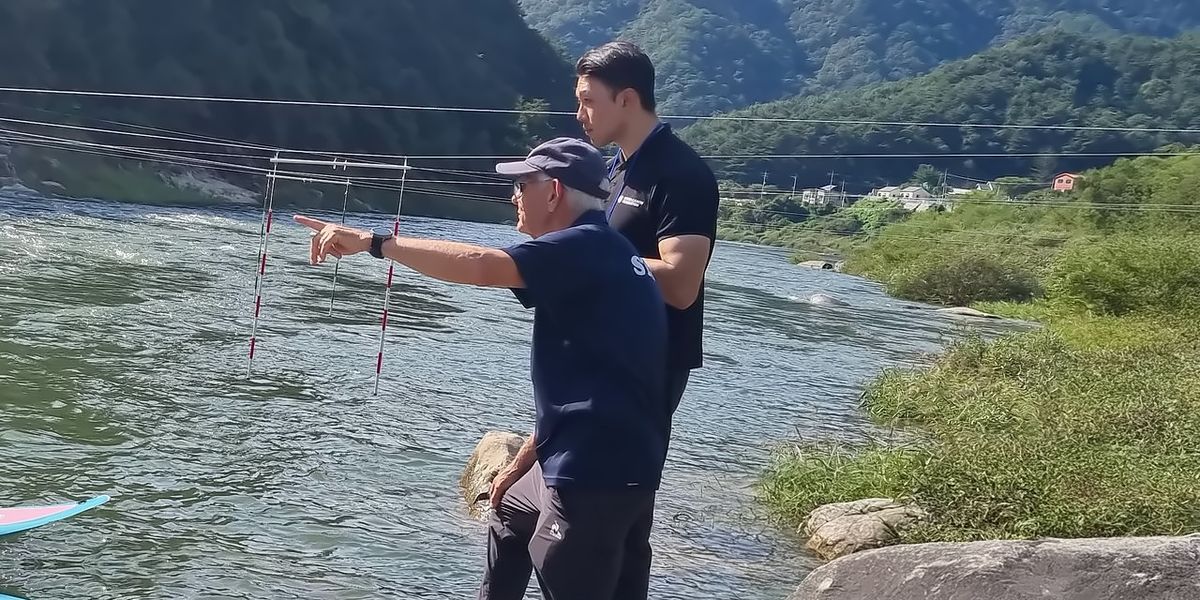
Image edited with AI
|
||||||||||||||||||||||||||||||||||
| 한국어로 보기 | ||||||||||||||||||||||||||||||||||
|
Hi from GO PADDLE 👋 We’re back with Part 2 of our slalom series 🛶 This time we follow Jean-Michel Prono, who led canoe slalom at the International Canoe Federation for 20 years — his three days in Inje and the conversation we had on his last evening 😊
At the 2024 Paris Olympics, Kayak Cross made its debut as a medal event: four paddlers start at once and race down the whitewater, bumping into one another as they go. The race goes back to 2006. That year Jean-Michel Prono, then chair of the ICF Slalom Committee, first proposed a new Olympic format in which paddlers race side by side: the ‘head-to-head’.
Having watched his idea reach the Olympic stage 18 years later, he was standing beside the Naerincheon, a mountain stream in Korea, the following year. In September 2025 he came to Inje in Gangwon Province as the invited coach of a canoe slalom training camp. Exhausted after three days of lectures and on-water sessions, he first politely declined the interview; only after we asked again did he sit down with us on the last evening.
The interview lasted 8 minutes and 39 seconds. In that short time he returned to the message he has carried for 20 years. This issue is built around that interview. 🛶
|
||||||||||||||||||||||||||||||||||
|
🎙 Interview
“My first contact with Korea was in 2005”
He first came for the Asian Championships 20 years ago — and came back the year after completing his 20 years as ICF slalom chair
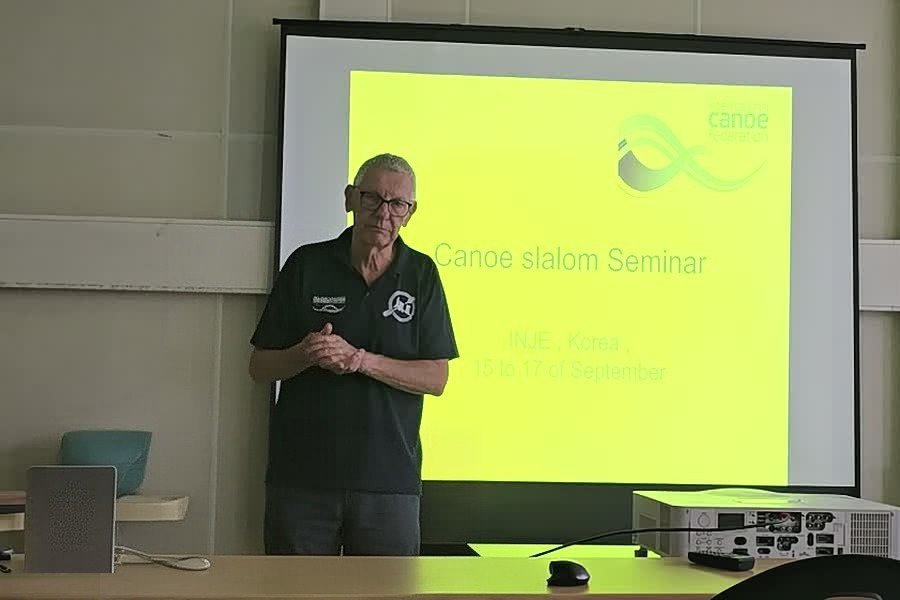
The first lecture, on the first morning · 2025.9.15 · Image edited with AI
The 2025 Canoe Slalom Training Camp and Seminar was hosted by the Korean Sport & Olympic Committee and organized by the Korea Canoe Federation. It ran for three days, September 15–17: on-water training on the Naerincheon, theory in the seminar room at Jajak Namu Stay. Those who completed it received a certificate.
For Kim Hyun-su, head coach of Korea’s national canoe slalom team, this camp meant more than most. As Part 1 told, he began travelling alone to France and Spain at 21 to learn slalom, and during Prono’s time at the ICF he was invited to its Talent Identification Programme (TIP) as Korea’s representative, training among athletes from many countries. Lessons he once had to go abroad for were now being taught in Korea. On the camp’s last day, he said:
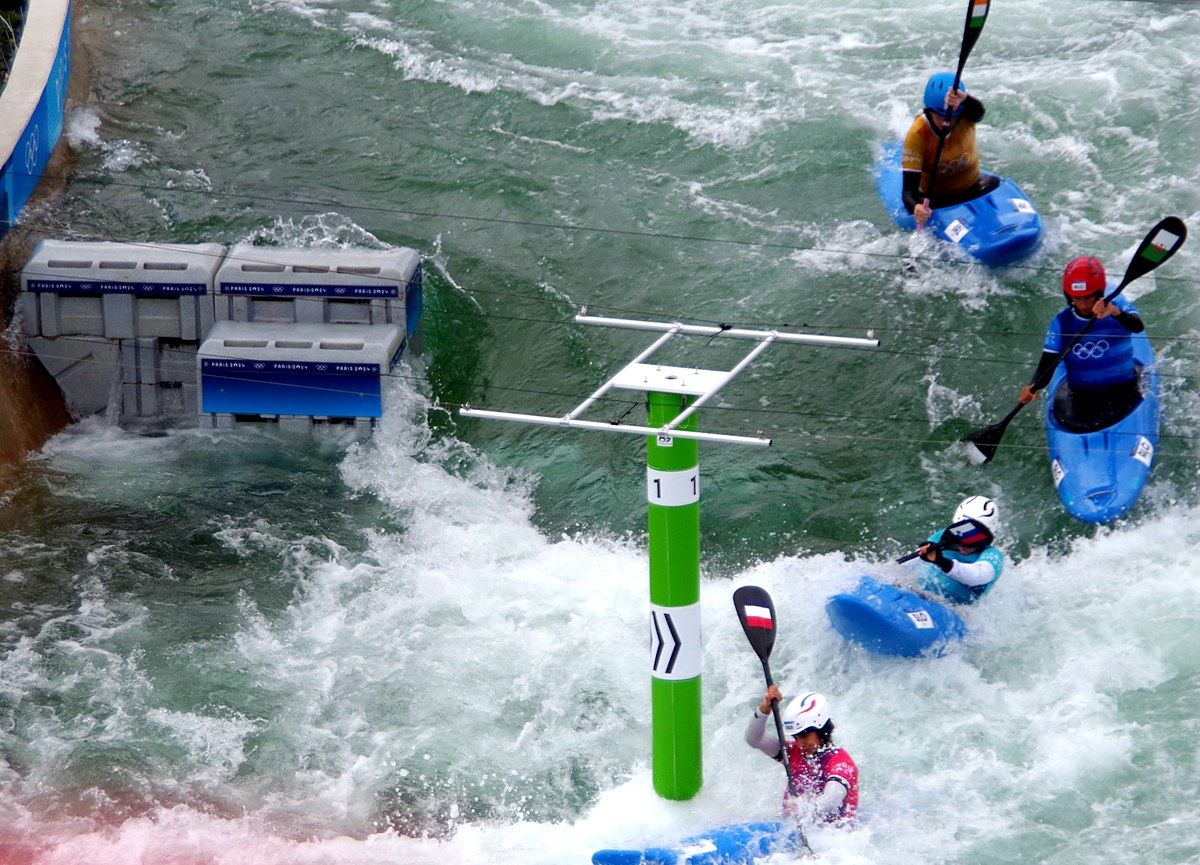
Kayak cross at Paris 2024 — four paddlers race down the same water · August 2024 · edited · Photo AlSepPhoenix · Wikimedia Commons original · CC BY 4.0
In the January 2006 Warsaw document, he argued that a head-to-head format could open more opportunities for developing nations to reach the Games. Looking back as his term ended, he said: “Kayak cross was the reason why I stayed for the mandate from Tokyo to Paris.”
|
||||||||||||||||||||||||||||||||||
|
🎙 Interview
“Korean loves outdoor sports” — and the condition that follows at once
Asked about Korea’s potential, he began with praise and ended with the request he has made for 20 years
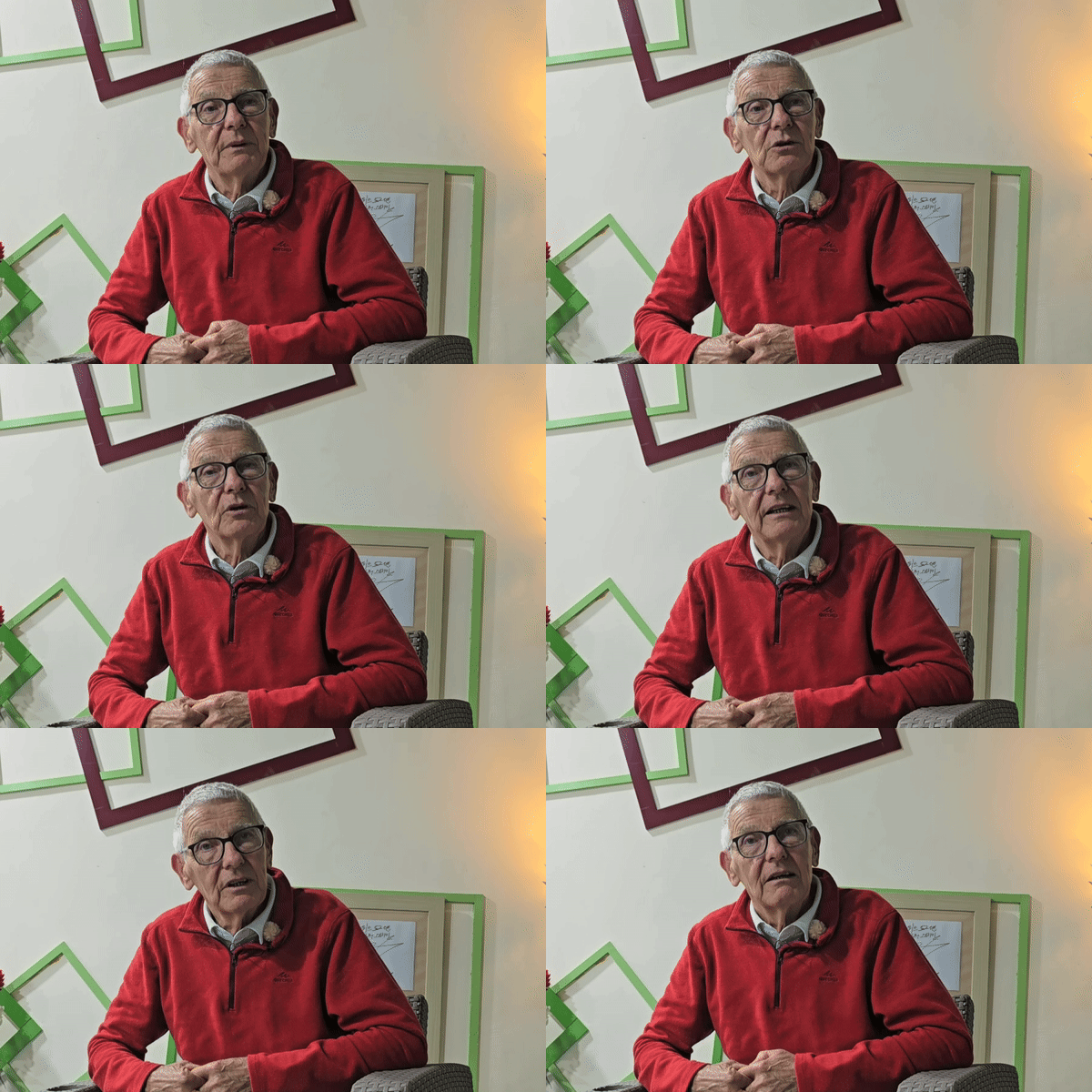
Jean-Michel Prono during the interview · Inje, 2025.9.17
It isn’t just a compliment. In the Ministry of Culture, Sports and Tourism’s 2025 National Sports Participation Survey, Koreans’ main activities were walking (40.5%), bodybuilding (17.5%) and hiking (17.1%), and hiking grew the most in a year. People who head for the mountains at weekends head for the water in summer: some 30,000 visitors come every year to raft the very Naerincheon where the camp was held. Plenty of Koreans already enjoy whitewater. Canoe slalom is the sport of racing it with skill.
What came right after that sentence is the heart of the interview. The moment he spoke of Korea’s potential, he went straight to facilities.
In an 8-minute-39-second interview, he spent a full minute and more, from 2:17 to 3:22, on this one subject. The question was about “Korea’s potential”; half of the answer was about a venue.
|
||||||||||||||||||||||||||||||||||
|
🌊 Technique · Instructors
“Slalom was a game people invented to be safer on whitewater rivers”
Asked where slalom stands in canoeing, he worked his way to the answer, starting from its origins
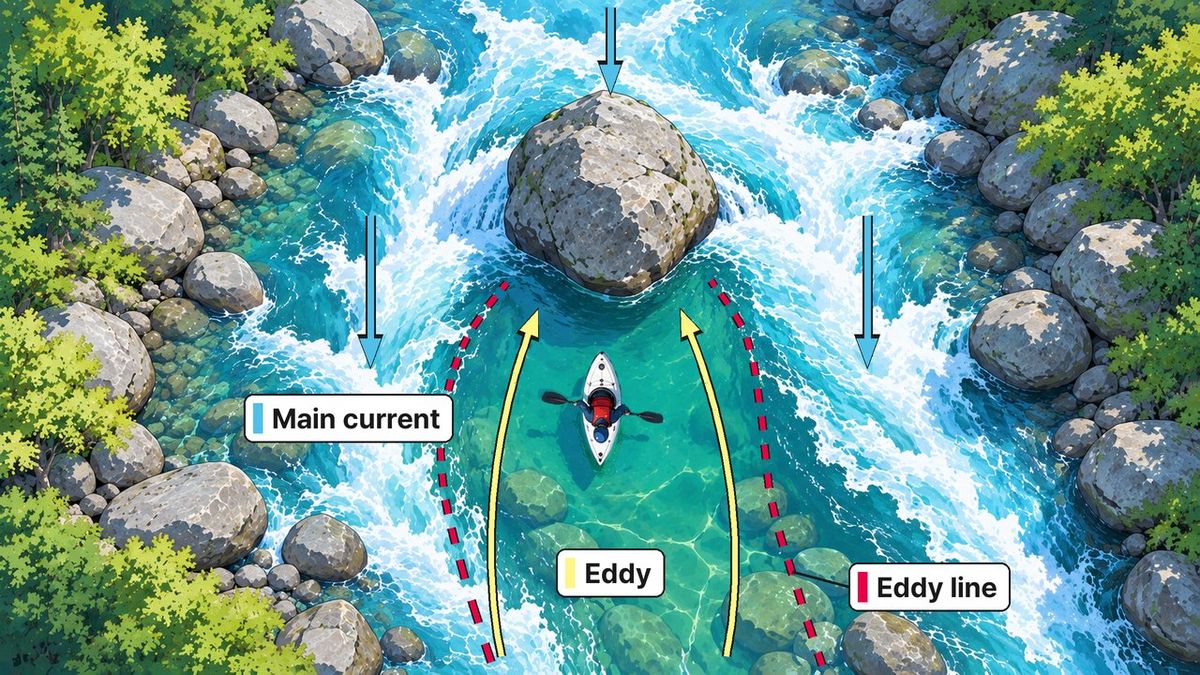
AI-generated image
This is why the sport is not someone else’s business. Before slalom was a race, it was a way to train for safety on whitewater. In fact, half of the 15 slides in the three-day seminar were about the structure of water, not paddling: the eddy behind an obstacle, looking upstream, the key zones to spot in a rapid, and the four zones of a smooth, pyramid-shaped wave. A ‘green’ wave is one that has not broken; its four zones are the downhill face, the trough, the uphill face and the crest. The downhill face, where the water pours down, carries the most force; the trough and the crest are points where the forces balance; and the uphill face, working against gravity, is weaker.

The four zones of a smooth wave · AI-generated image
As coach Kim Young-mi put it in Part 1, on whitewater the same gate is different water two seconds later. Anyone who teaches SUP or kayaking on rivers will know this. Run the same course twice on the same day and the water is different. What a lesson has to teach is not only the moves but how to read the structure of the water in front of you right now.
|
||||||||||||||||||||||||||||||||||
|
🏛 History · Venues
“When you are Olympic discipline, you have support from the government”
The growth formula he described — and the channel of running water it needed in order to work
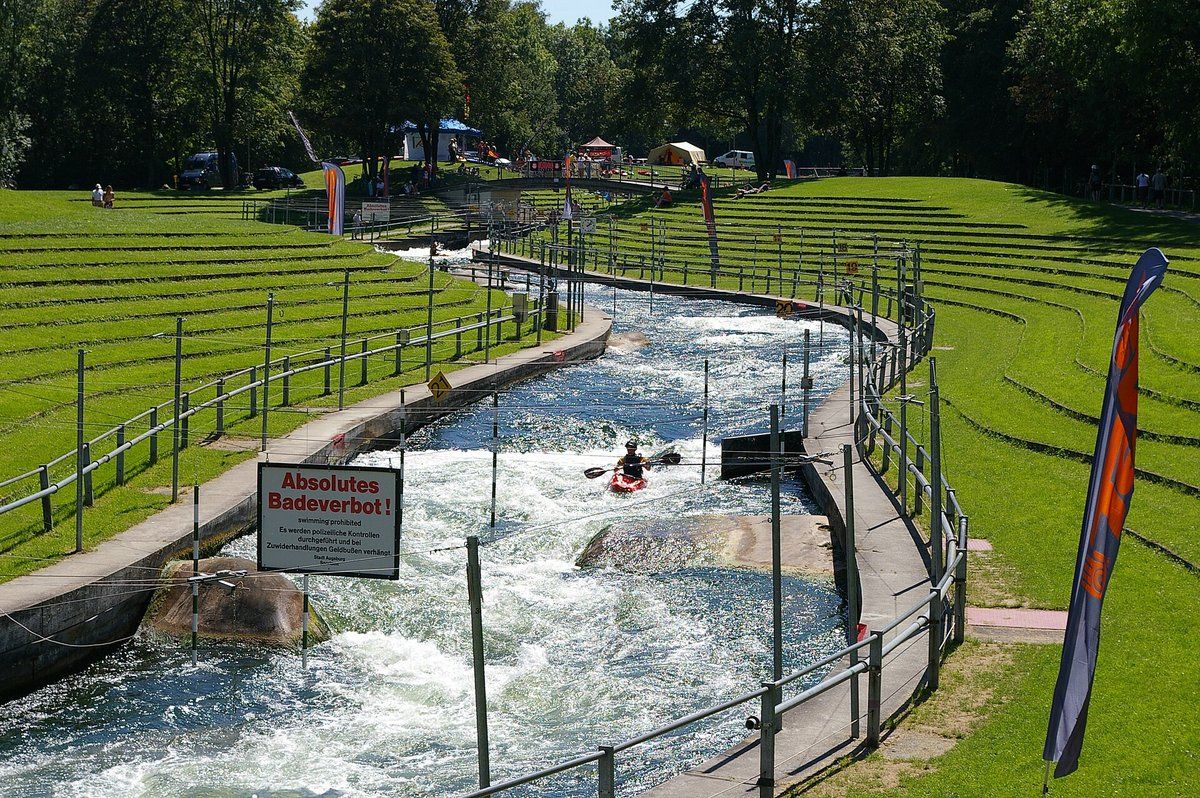
That 1972 Olympic debut was possible because the world’s first artificial whitewater course existed in Augsburg, Germany: the Eiskanal. The history of this sport was written not by rivers but by channels. How that channel became the model for whitewater venues around the world is the story of Part 3.
|
||||||||||||||||||||||||||||||||||
|
🌧 On site · Safety
Rain fell on day three — and that morning’s lecture had already given the answer
When the water level changes, the gate rules themselves cannot be met · and this river’s eddies are not balanced left and right
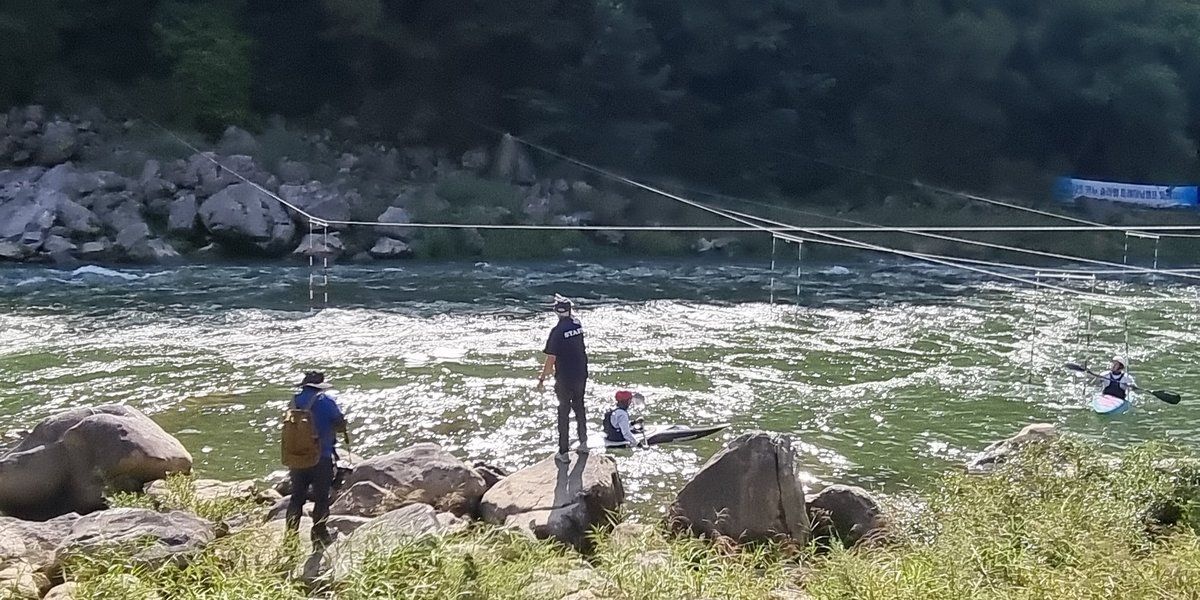
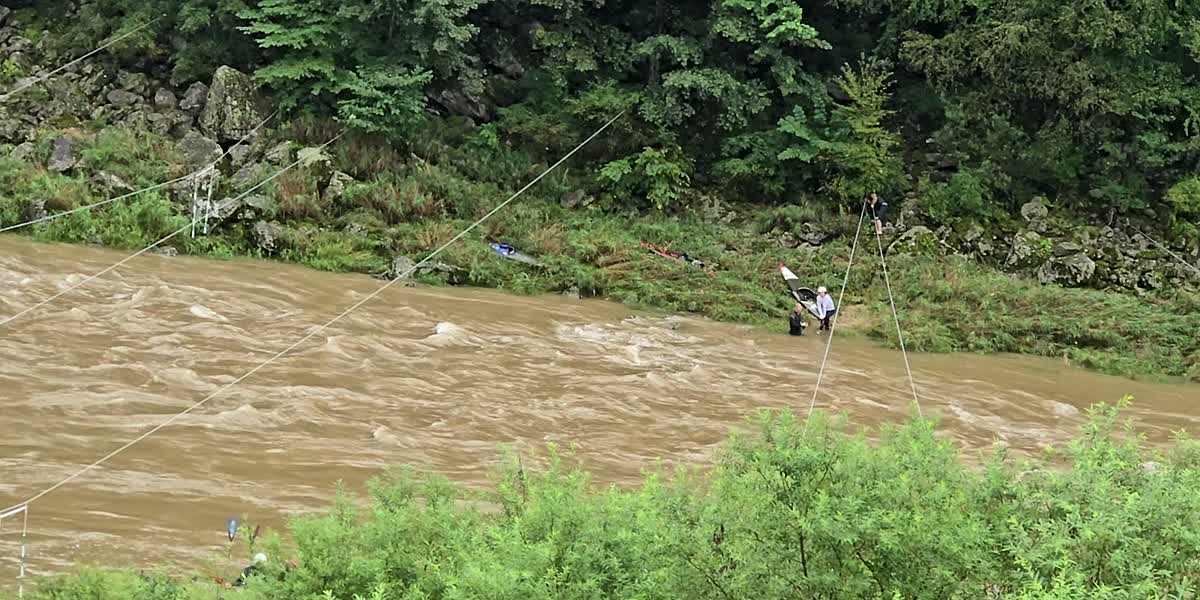
On the afternoon of September 17, the last day of the camp, it rained. Our footage shows the Naerincheon swollen and brown. Two days earlier, at the same spot, you could see the stones on the riverbed.
The same Naerincheon slalom course · Photos: GO PADDLE
That afternoon was set aside for designing the course and hanging the gates for the national team selection race planned for the next day.
As it happened, Prono’s lecture that very morning had already explained the situation. A gate pole must hang 20 cm above the water, and when the water surges it becomes unclear where to measure from.
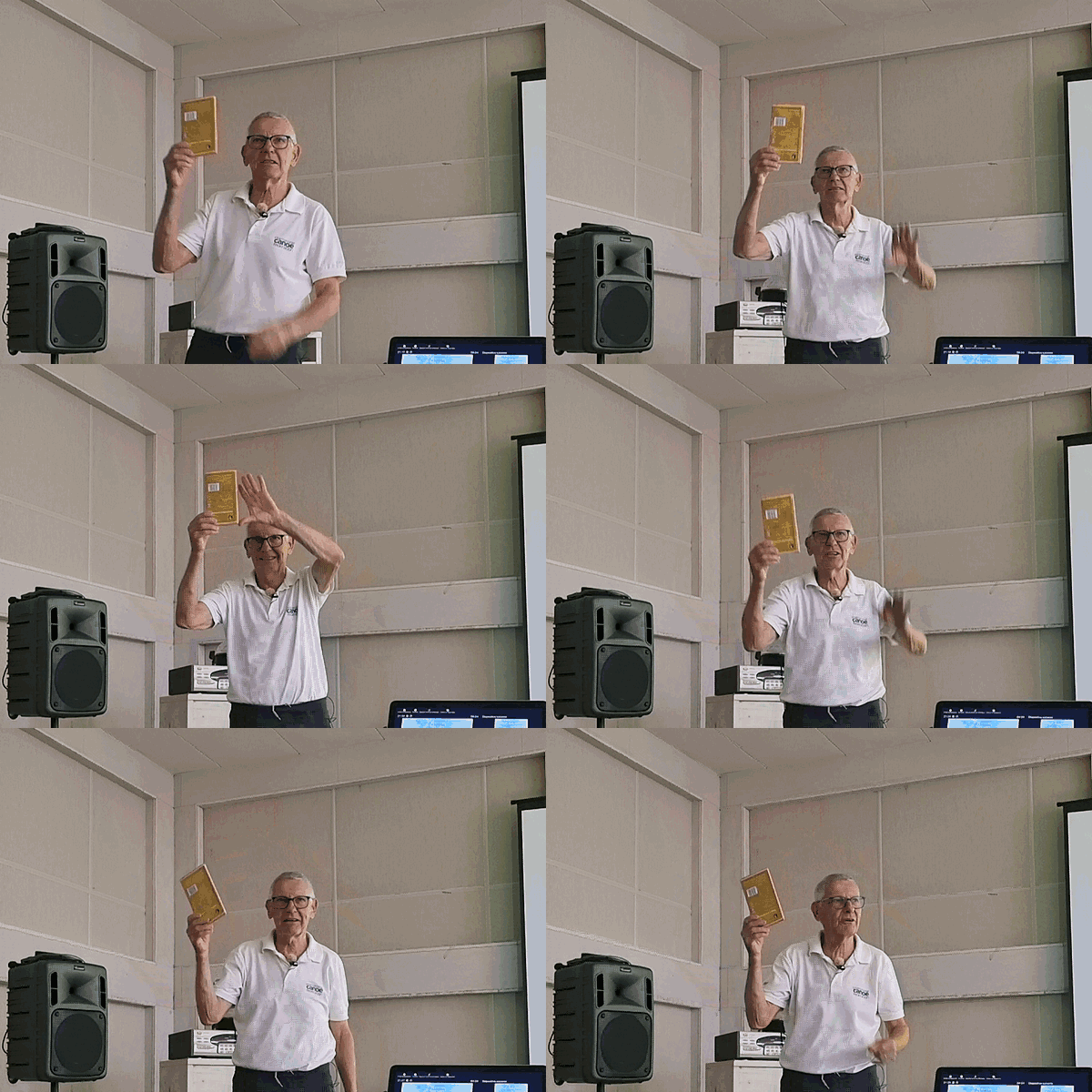
“So 20 centimeters is this chocolate tablet. 20. Okay? It’s not twice this.” — Prono showing the 20 cm gate height with a chocolate bar · day-3 morning lecture · 2025.9.17 · The chocolate bar was a gift from Yeonsu and Junsu Na, brothers who race slalom in New Zealand, shared with all the participants
In the same lecture he also pointed out the limits of the Naerincheon itself. A slalom course is fair only when the upstream gates on the left and right are of similar difficulty, yet here, he said, “we have reasonable eddy on the right, but no eddy on the left.” So it is “more difficult here than in a normal established slalom course.”
On a natural river it is hard to build a fair course, and when it rains even that stops meaning anything. The reason he has been talking about a permanent venue for 20 years played out in front of everyone on the afternoon of day three.
|
||||||||||||||||||||||||||||||||||
|
🧭 Policy · Outlook
While we wait for Ulsan — where you can learn now
Korea’s first international-standard slalom venue is still at the planning stage · until then, the way into slalom is whitewater kayaking
Twenty years of persuasion have taken shape in Ulsan. On September 11, 2024, the city of Ulsan and the Ulsan Sports Council signed an agreement to promote canoeing with the International Canoe Federation, the Asian Canoe Confederation and the Korea Canoe Federation. It was Prono’s last year as ICF slalom chair.
Ulsan’s slalom venue is still at the planning stage; design work has not yet begun. Its size and budget, when it might open, and what it takes for a whitewater venue to survive once the races are over are the subject of Part 3.
Until the Ulsan venue opens, though, nothing has changed. Asked where members of the public should go to learn slalom, head coach Kim Hyun-su answered:
As the coach says, the way into slalom is whitewater kayaking — and that you can learn in Korea. GO PADDLE has listed only places confirmed to be operating as of September 2026.
At the end of the interview, we asked Prono if there was anything he wanted to say. He answered:
|
||||||||||||||||||||||||||||||||||
|
GO PADDLE Slalom Series
◀ Part 1Part 3 · Oct 13 ▶
Did someone forward this to you?
📩 Subscribe to GO PADDLE
|
||||||||||||||||||||||||||||||||||
|
Sources · ICF: Jean-Michel Prono profile · Prono’s CV as ICF slalom chair candidate (2021) · ICF: departing Prono reflects on 20 years · ICF: 100-year honorary members · ICF: Augsburg Eiskanal · Financial News (2024.9.11) Ulsan–ICF agreement · ICF: key dates in kayak cross history · ICF: slalom cross explained (2016) · ICF: Secretary General Simon Toulson announces departure · Eric Jackson, “Extreme Slalom” (Paddler eZine) · Money Today (2026.1.19) 2025 National Sports Participation Survey · 2016 Canoe Slalom World Cup (Ivrea) · ICF (2017.10.1) first extreme slalom world champions · ICF (2020.12.7) IOC approves Paris 2024 plan · Canoeing at the 2024 Olympics · Kuki News (2025.6.17) Naerincheon rafting
Primary sources · Korea Canoe Federation, 2025 Canoe Slalom Training Camp & Seminar guidelines (2025.9.5) · Jean-Michel Prono, seminar slides “Inje, CSL seminar Presentation” (2025.9) |
||||||||||||||||||||||||||||||||||
| GO PADDLE collects news on canoeing, kayaking, SUP, surfing and wing foiling for instructors and paddlesport businesses in Korea. | ||||||||||||||||||||||||||||||||||
|
||||||||||||||||||||||||||||||||||
| ▲ Back to top | ||||||||||||||||||||||||||||||||||
|
GO PADDLE All interviews, field notes, photos and video in this article were reported and filmed by GO PADDLE. |
||||||||||||||||||||||||||||||||||
| GO PADDLE newsletter · Korean original sent 2026.10.6 |