|
GO PADDLE No. 30 · SLALOM SERIES · PART 3
Ulsan’s Whitewater Venue: Will It Become London or Beijing?
From Augsburg to Kasai, and on to Ulsan
How whitewater venues grow a sport — and how they survive |
||||||||||||||||||||||||||||||||||||||||||||||||||||||||||||||||||||

|
||||||||||||||||||||||||||||||||||||||||||||||||||||||||||||||||||||
| 한국어로 보기 | ||||||||||||||||||||||||||||||||||||||||||||||||||||||||||||||||||||
|
Hi from GO PADDLE 👋 Here it is — the final part of our slalom series 🛶 In Part 1 we met canoeing on whitewater; in Part 2, the man who led canoe slalom at the International Canoe Federation for 20 years. Today we follow the channels where the sport grows: whitewater venues 🌊
In September 2025, Ulsan announced plans to build Korea’s first international-standard canoe slalom venue in Ulsan Sports Park. A year later, on September 4, 2026, the Korean National Canoe Championships opened on the Taehwa River in Ulsan. Before the opening ceremony, Ulsan mayor Kim Sang-wook sat down with officials from the Korea Canoe Federation and the Asian Canoe Confederation, and in a meeting streamed live on his YouTube channel, he raised the canoe slalom venue before he even gave his welcome.
He was neither saying “build it” nor “drop it.” What the mayor asked was whether the venue could be run sustainably once it is built. And it is the very same question that decided whether Olympic whitewater venues were still alive decades later, or had run dry.
The final part of the series takes that question on a tour of the world’s whitewater venues. Along the way we will revisit the question left open in Part 1 — why Korea and Japan, who set out from the same river in 2005, went different ways — with the venue as our clue. 🛶
|
||||||||||||||||||||||||||||||||||||||||||||||||||||||||||||||||||||
|
🏛 History · Venues
Slalom’s first Olympic stage was a man-made channel
The 1972 Munich Olympics · the Eiskanal, the world’s first artificial whitewater course
The Eiskanal (“ice channel”) in Augsburg, Germany, was not built as a venue. It was dug in 1878–79 to flush ice away from a waterworks that carried water from the River Lech into the city. In 1946 wooden obstacles were placed in the channel to create rapids, and the following year it hosted its first slalom race.
When slalom became an Olympic event for the first time at the 1972 Munich (München) Games, the races were held in this channel. The sloped stands around the channel were built for 24,000, yet some 30,000 came — 6,000 more than there was room for, a sign of how much interest the new event drew. The Eiskanal went on to become the model for later Olympic venues such as Barcelona, Sydney and London, and more than 50 training and competition sites in 18 countries were built with it as a reference. In 2019 Augsburg’s historic water management system — 22 sites including old canals, water towers, hydropower stations and fountains, the Eiskanal among them — became a UNESCO World Heritage Site, and in 2022 the World Championships returned to the course that had hosted the Olympics half a century earlier.

The Eiskanal in autumn 1972, after the Olympics · Photo Eckhard Henkel · Wikimedia Commons original · CC BY-SA 3.0 de
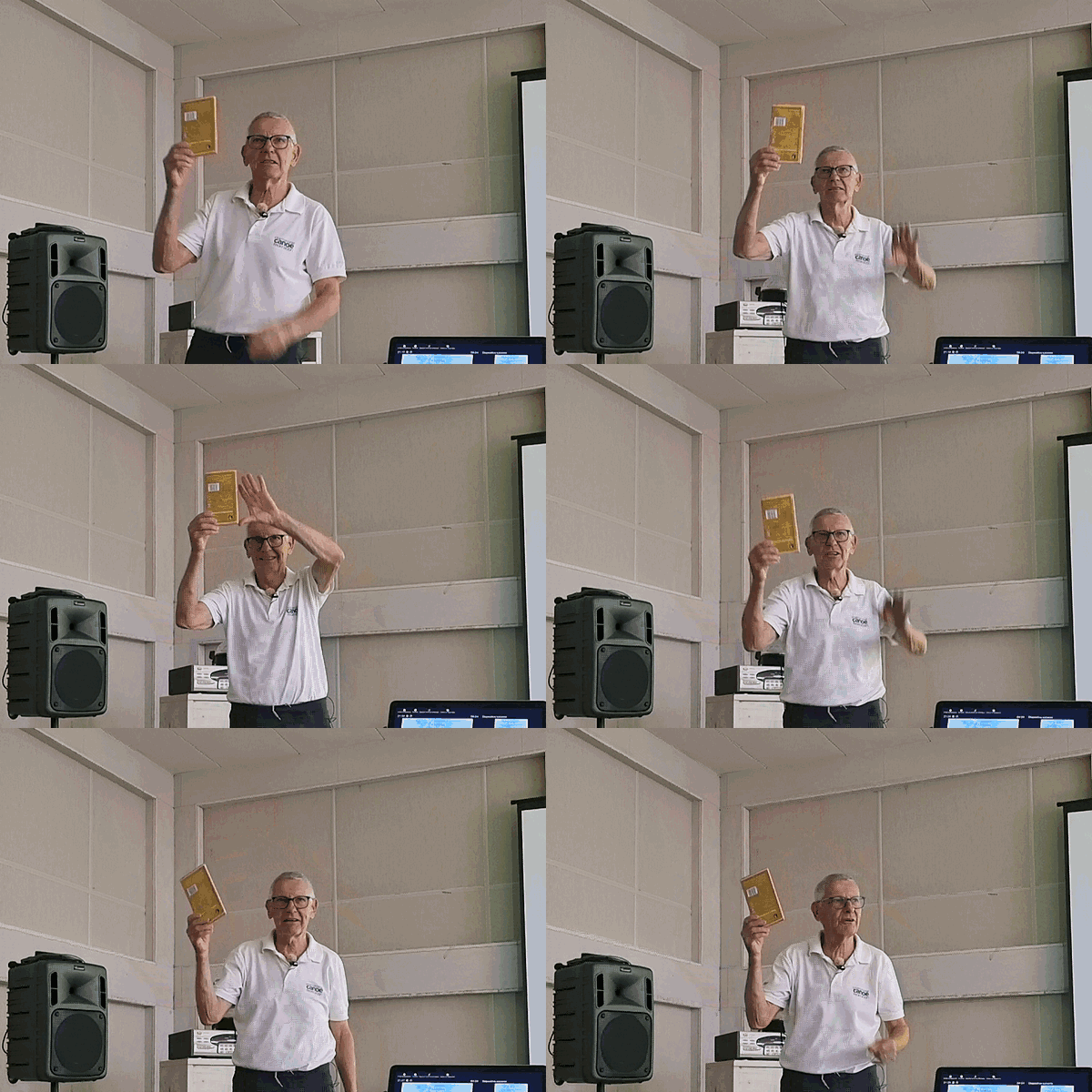
In the last-evening interview in Inje that we covered in Part 2, Jean-Michel Prono was asked where slalom stands within canoeing, and he answered step by step, starting from its origins. This is the conclusion he reached:
For slalom to stay in the Olympics, it needs, above all, venues to race on. But whether a venue survives is another question. The whitewater venues built around the world after the Eiskanal had their futures decided by whether people kept using them once the Games were over.
|
||||||||||||||||||||||||||||||||||||||||||||||||||||||||||||||||||||
|
🌍 Abroad 1
London opened its doors to the public before the Olympics
Lee Valley White Water Centre · national team training base and public rafting centre in one
The Lee Valley White Water Centre in north London opened in December 2010, a year and eight months before the Games. It was the first new London 2012 venue to be completed, and the only new venue to open to the public before the Games. It cost £31 million (about 55 billion won at the time), and in the summer of 2012, 55,000 people watched slalom there over five days.

Lee Valley on a London 2012 Olympic slalom day · 2012.8.2 · Photo Mark Percy · Wikimedia Commons original · CC BY-SA 2.0
What really matters is what happened after the Games. Lee Valley reopened to the public just six weeks after the closing ceremony, and some 290,000 people visited in the year or so that followed. More than £6 million (about 10 billion won) was then spent building an elite training centre and new parking. Today it is the training base of Britain’s canoe slalom team and a public leisure venue running rafting at least five days a week; rafting is also its most popular activity. It hosted the World Championships in 2015 and 2023.

Public rafting at the Lee Valley White Water Centre · 2016.6 · Photo sludgegulper · Wikimedia Commons original · CC BY-SA 2.0
The secret is in the design. Lee Valley has two courses: the 300 m Olympic Course, where the Games were raced, and beside it the 160 m Legacy Loop, built separately for beginners. While athletes train on the Olympic Course, people new to whitewater take their first steps on the Legacy Loop. On the warm-up and cool-down lake where the water from both courses collects, SUP and kayak tasters and an inflatable obstacle course let families get on the water together from age 8, and swimmers use the pool-standard, chlorinated water for year-round open water swimming on a 250 m triangular loop. The Lee Valley Regional Park Authority, which runs the venue, says this commercial activity makes the venue “economically sustainable.”

Kayaks filling Lee Valley’s boat store · 2015.6 · Photo Christine Matthews · Wikimedia Commons original · CC BY-SA 2.0

Lee Valley’s two courses — a separate beginners’ Legacy Loop runs beside the Olympic course · Map HowardMorland (labels added by GO PADDLE) · Wikimedia Commons original · CC BY-SA 3.0
|
||||||||||||||||||||||||||||||||||||||||||||||||||||||||||||||||||||
|
🌍 Abroad 2
Beijing’s channel was found dry just over ten years on
Athens 2004 · Beijing 2008 · Rio 2016 — venues built for the Games
The slalom course at Beijing’s Shunyi Olympic Rowing-Canoeing Park was completed in July 2007, a year before the Olympics, and held its first competition that August. Just over ten years later, in December 2018, when the English-language outlet The Beijinger went to see it, the channel had run dry. The article said the site had been “mostly left to ruin” after its Olympic glory, with broken boats strewn beside a stalled conveyor belt. The park’s rowing and sprint canoe course survived as a national sports training base; the slalom channel did not.
Beijing was not alone. In 2014, ten years after the Games, the Athens 2004 slalom venue stood drained and abandoned (BBC).

The drained Athens 2004 slalom venue (Hellinikon) · Photo Arne Müseler / arne-mueseler.com · Wikimedia Commons original · CC BY-SA 3.0 de
Rio 2016’s Deodoro venue closed that December when no operator could be found, and when it reopened about nine months later, only the pool was open, with the whitewater system not in operation.
The three venues in Beijing, Athens and Rio have one clear thing in common. All were built to meet the date of the Games, but plans for who would operate them and how to keep them in regular use afterwards were not strong enough to keep them going. That is also why Mayor Kim asked first not whether to build, but how much the public would use it once built.
|
||||||||||||||||||||||||||||||||||||||||||||||||||||||||||||||||||||
|
🌍 Abroad 3
Oklahoma City, USA: a venue the public used first
A public whitewater park about 1,900 km from LA becomes the LA 2028 slalom venue
Unlike London and Beijing, which were built for the Olympics, one venue was built for the public and only later became an Olympic venue: Riversport Rapids, the artificial whitewater course in Oklahoma City that we introduced in Part 1 as the LA 2028 slalom venue. Its story begins with a river. The seven-mile stretch of the North Canadian River through downtown Oklahoma City was for years a dry riverbed, its water diverted to keep downtown from flooding. In 1993 residents voted to pay a one-cent sales tax, and the city used it to build dams and fill the river with water. Renamed the Oklahoma River in 2004, its banks filled up with rowing boathouses, and in 2008 the US national rowing team’s training centre arrived too.
The whitewater course was the next step. In 2009, as the mayor and city council drew up the next list of projects, they asked the public for ideas and held a series of public meetings. Alongside a downtown park, a streetcar and trails, upgrades to the Oklahoma River made the list — including a whitewater facility for rafting, kayaking and canoeing for every skill level, from beginner to expert. In December 2009 residents approved it by a narrow 54 to 46. Nothing was borrowed: projects were built only as fast as the tax came in.
Riversport Rapids opened in May 2016. Its $45.2 million cost (about 52 billion won at the time) was paid entirely from that sales tax. When it was built, there was no Olympic plan at all. It was planned as a public facility running rafting, kayaking and tubing, plus lessons, leagues and camps, and a non-profit foundation runs it. The team behind Lee Valley designed it.

Riversport Rapids, right next to downtown · 2016.10 · Photo Allison Meier · Flickr original · CC BY-SA 2.0
Because residents paid for it, they get a clear share back. In the summer season the grounds are open free of charge, so anyone can come and watch the rafters and kayakers. With donations, the foundation has taught rowing free of charge to more than 2,500 students from underserved communities through a school league, and since 2019, 9,201 young people have taken part in its outdoor programmes; in 2023 alone it gave 912 field-trip and 502 summer-camp scholarships. It also runs dedicated programmes for military veterans, people with disabilities and first responders.

Public rafting at Riversport Rapids · 2016.10 · Photo Allison Meier · Flickr original · CC BY-SA 2.0
In 2025, nine years after it opened, the LA 2028 Olympic canoe slalom was awarded not to Los Angeles but to this course.
A facility that residents paid for and had been using was selected, just as it was, as an Olympic venue. The Ulsan mayor’s request — that clubs should first spring up in companies and schools — follows the same order.
|
||||||||||||||||||||||||||||||||||||||||||||||||||||||||||||||||||||
|
📊 At a glance
After the Games, what happened to the venues?
Venues in order of opening year. Operations as described on each venue’s or operator’s website, ICF and local tourism sources. Tap a venue name to open its official site (Deodoro links to Rio City Hall’s news page; Beijing Shunyi and Hellinikon have no active official channel). Venues not built for an Olympics show location only.
|
||||||||||||||||||||||||||||||||||||||||||||||||||||||||||||||||||||
|
🧭 Policy · Outlook
The Ulsan venue and the mayor’s two conditions
The hurdle to clear first is national funding. The venue needs 29 billion won in national funding, but the 2026 national budget included just 200 million won. The June 2026 local elections replaced Kim Doo-gyeom, the mayor who drew up the plan, with Kim Sang-wook. As mayor-elect, he cited the total cost and how the venue would be run and maintained once finished, and said the project needed to be reviewed.
Three months later on the Taehwa River, the mayor’s answer was two conditions.
To win national funding, the venue has to be one the country needs, not just Ulsan — and there are good reasons it is.
National funding is for the government and the National Assembly to decide. The second condition — whether the upkeep can be carried once it is built — is also the test that separated London from Beijing. The answer comes down to whether citizens keep coming back to paddle it, and the people to fill that part are the citizens of Ulsan and the paddlers of Busan, Ulsan and Gyeongnam.
On running costs, Ulsan starts from a strong position. Ulsan Sports Park, where the venue will be built, has a lake, and according to a city official, Ulsan is considering drawing water from this lake instead of using mains water for the venue. Not relying on tap water means a lighter water bill.
Drawing on nearby water is something long-lived venues have in common. The Eiskanal takes water from a weir on the River Lech, while Slovakia’s Čunovo runs on water from a dam on the Danube, and Lee Valley on groundwater.
A lake does more than supply water. As at Lee Valley, a calm lake beside the venue could be where first-timers get comfortable on the water.
As Part 1 reported, when GO PADDLE checked at the end of September, design work had not yet begun. Set the conditions of long-lived venues abroad against Ulsan’s plan now, and they look like this.
Three of the five — rafting, the water-rescue training centre, and the ice rink and outdoor pool — are already in the plan Ulsan announced in 2025. A beginners’ course and an operator can be settled together at the design stage.
Now back to the question left open in Part 1. No single reason explains why Korea and Japan, who set out together on the Naerincheon in Inje in 2005, went different ways, but the most visible difference was a venue. Part 1 looked at how Japan’s results changed after the Kasai venue opened, but results were not the only thing that changed. The Tokyo Metropolitan Government (東京都), which owns the venue, opened it to the public in July 2022, the year after the Games (held in 2021), and today a private operator runs rafting and canoe classes there. The Tokyo government’s own news site says rafting is especially popular with families. Families launching boats at the weekend on the water where athletes train — it is no different from London. Penrith in Australia, where Japan won its first World Championship medal, is likewise a venue that survived as a public rafting centre after hosting the Olympics 25 years ago.
Japan built a venue and has kept it running ever since the Games ended. Korea has yet to build either the venue or a system to run one. The Ulsan venue is the first chance to build both at once.
Ulsan also has the conditions to support a venue. Ulsan Sports Park, where the venue will be built, already has football, baseball and tennis facilities, so parking and other infrastructure can be shared, and once the regional rail line and urban tram open, the venue will be easy to reach from anywhere in Busan, Ulsan and Gyeongnam.
|
||||||||||||||||||||||||||||||||||||||||||||||||||||||||||||||||||||
|
🎙 Interview · Careers
The people a venue brings with it
Officials, medical staff — a venue calls for more than athletes
Kim Young-mi, who coaches middle- and high-school athletes in Pohang, is also an international official in both canoe sprint and slalom. Asked whether slalom needs course designers and many officials, she listed the seats at the officials’ table one by one.
Medical staff are needed at the water’s edge too. Hwang Mun-hyeon, the national team’s athletic trainer who joined the camp, said that because the sport trains on moving water, there is a risk more common than injury.
That is why a venue needs medical staff to look after athletes and visitors, and people to manage its water quality. Unlike a natural river used only on race days, a permanent venue gives them a place to work all year round.
Kim Young-mi compared the many roles that grow from this to a single tree.
On natural rivers these branches rarely get the chance to grow: rain stops the races, and when the water drops, the course disappears. Only a permanent venue creates steady jobs for officials, medical staff and instructors.
On the final day of the three-day lectures, Jean-Michel Prono said goodbye to the participants like this:
Venues grow a sport. Venues built only for the Games did not last; what sustained a venue after the Games was the public who kept coming back. Ulsan already has many of the conditions to become London: a lake beside the site, the big Busan–Ulsan–Gyeongnam market, the Asian Canoe Confederation’s headquarters, and athletes and instructors who have been waiting for whitewater. What remains is to design it as a public venue from the very start.
In a venue built that way, Korean canoeing would for the first time have whitewater to train on at home and share with the public. Ulsan can be the first city to make that happen.
|
||||||||||||||||||||||||||||||||||||||||||||||||||||||||||||||||||||
|
GO PADDLE Slalom Series
◀ Part 1◀ Part 2
Did someone forward this to you?
📩 Subscribe to GO PADDLE
|
||||||||||||||||||||||||||||||||||||||||||||||||||||||||||||||||||||
|
Sources · Kim Sang-wook TV (2026.9.4) National Canoe Championships opening · Ulsan Maeil (2025.9.2) Ulsan slalom venue confirmed — facilities, youth hostel, transport, Korean · Seoul Shinmun (2025.9.2) Ulsan canoe slalom venue · Ulsan MBC (2025.9.2) budget and national funding · Gukje News (2025.12.3) Ulsan 2026 national budget · Kyongsang Ilbo (2026.6.26) review mentioned · ICF: Augsburg Eiskanal · Lee Valley Regional Park Authority · UK Sport (2013.12.17) · Lee Valley White Water Centre · The Beijinger (2018.12.3) · Hellinikon Slalom Centre (citing BBC, 2014.8.7) · Around the Rings: Deodoro · Penrith Whitewater Stadium · Tokyo Metropolitan Government (2023.4.14) Kasai · Sports Destination Management (2016.4.25) Oklahoma City · Riversport Rapids · Beijing Municipal Government · Shunyi Olympic Water Park, Chinese · Baidu Baike · Shunyi Olympic Rowing-Canoeing Park · Sun Rowing Club · China.com.cn (2018.6.30) Shunyi park opens indoor ice arena, Chinese · Wikipedia · Deodoro Olympic Whitewater Stadium · Rio City Hall (2024.5.29) Parque Radical de Deodoro, Portuguese · Ulsan Facilities Management Corporation · Ulsan Sports Park, Korean · Korean Sport & Olympic Committee results · 2025 canoe slalom selection trials, Korean · Newsis (2018.5.17) Samcheok Osipcheon slalom course selection trials, Korean · Korea Coast Guard · rafting guide training bodies, Korean · Water Leisure Safety Act Enforcement Decree, Korean · Korea Life Saving Association Busan · rafting guide course, Korean · CDC MMWR (1997) Leptospirosis among white-water rafters, Costa Rica · CDC MMWR (1998) Leptospirosis among triathletes, Illinois · ESPN (2015.8.20) Korean windsurfer falls sick after Rio test event · Kyoei (2022.7.21) Canoe Slalom Centre public opening, Japanese · Wikipedia · Augsburg Eiskanal (water source, specs) · Wikipedia · List of artificial whitewater courses · Riversport · Oklahoma River history · Wikipedia · MAPS 3 · Riversport Foundation · mission and youth programmes · Riversport · impact (2019–2023) · ICF (2025.4.9) LA28 canoe events and quotas · YTN (2024.4.28) Korean-New Zealander brothers dreaming of racing for Korea · Korea Coast Guard: water rescuer licence information
Some Wikimedia Commons photos have been cropped. Won conversions · annual average exchange rate for the year the money was spent (Bank of Korea) — 2010: £1 ≈ 1,787 won; 2013: £1 ≈ 1,713 won; 2016: $1 ≈ 1,160 won |
||||||||||||||||||||||||||||||||||||||||||||||||||||||||||||||||||||
| GO PADDLE collects news on canoeing, kayaking, SUP, surfing and wing foiling for instructors and paddlesport businesses in Korea. | ||||||||||||||||||||||||||||||||||||||||||||||||||||||||||||||||||||
|
||||||||||||||||||||||||||||||||||||||||||||||||||||||||||||||||||||
| ▲ Back to top | ||||||||||||||||||||||||||||||||||||||||||||||||||||||||||||||||||||
|
GO PADDLE All interviews and field notes in this article were reported and filmed by GO PADDLE. |
||||||||||||||||||||||||||||||||||||||||||||||||||||||||||||||||||||
| GO PADDLE newsletter · Korean original sent 2026.10.13 |